CULTURAL AND DIVERSITY CONTEXT: EMBRACING PLURALISM
Theoretical Framework
Beyond the Surface In the Australian early childhood sector, diversity is viewed through the lens of Social Constructionism and Critical Race Theory. We acknowledge that culture is not just about "food, festivals and flags", but also about deep-seated values, communication styles and worldviews.
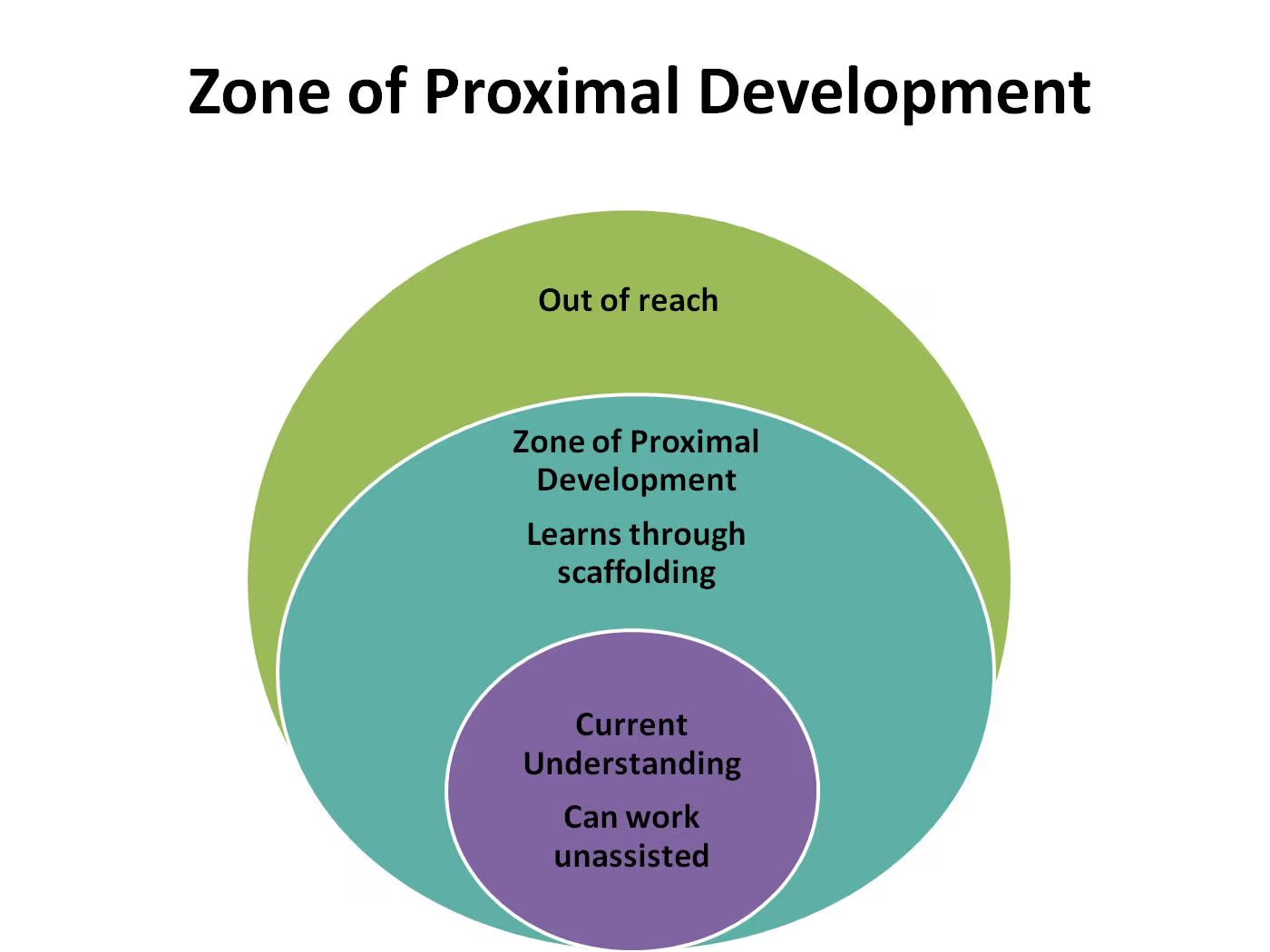
Social Constructivism
Based on the work of Vygotsky (1978), this theory posits that a child's learning cannot be separated from their social and cultural context. Knowledge is co-constructed through interactions, which means an educator must respect a child's cultural "tools" to facilitate meaningful cognitive development.
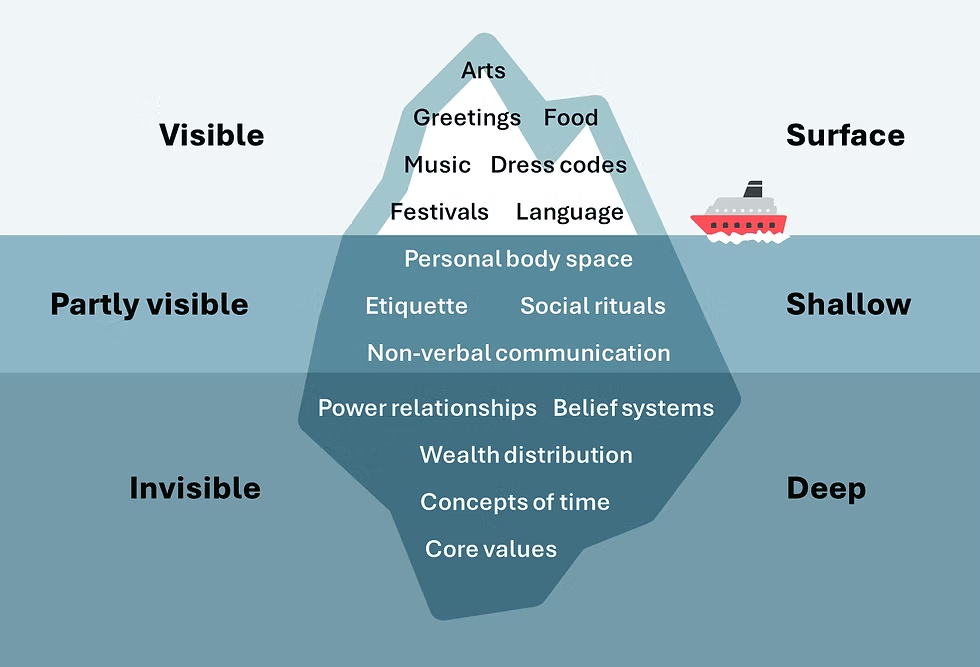
The Cultural Iceberg Model (Hall, 1976)
This theory suggests that only a small part of culture is visible, such as clothing and food. However, the majority - including concepts of time, child-reading beliefs and non-verbal communication - is hidden "below the waterline". Educators must navigate these deeper levels to truly understand children's behavior and learning styles (Hall, 1976).
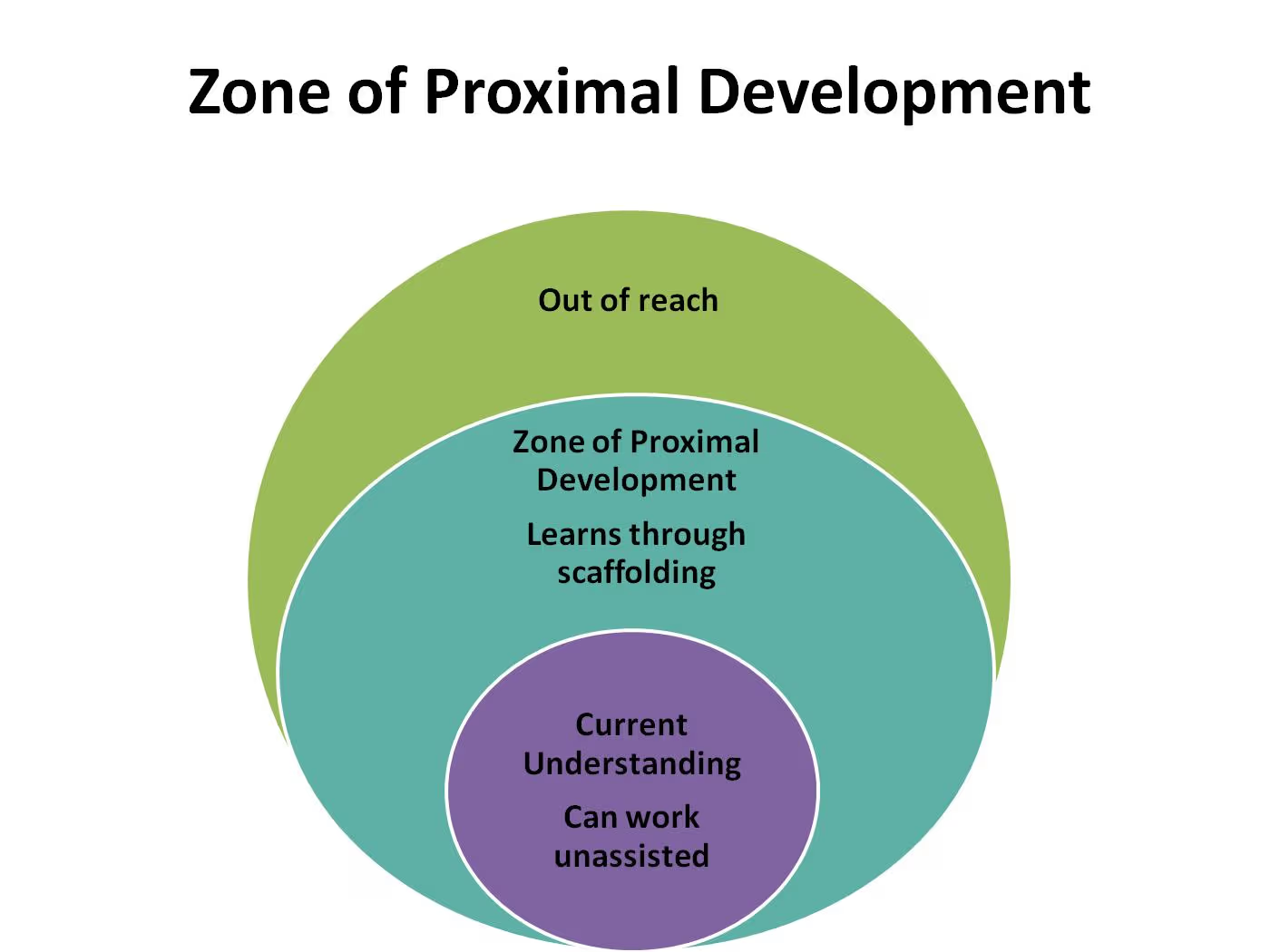
Cultural Responsiveness
Moving from "competence" to "responsiveness" implies a continuous process of learning and unlearning. Drawing from Ladson-Billings (1995), cultural responsiveness requires educators not only to acknowledge diversity but also to adapt their teaching practices to align with the children's cultural identities and life experiences. This change ensures that the curriculum is a "mirror" into the child's own life and a "window" into the lives of others.
Impact: Cultural Safety and Identity
The cultural context directly shapes a child’s social-emotional health and their capacity to engage with learning
Cultural Safety
According to SNAICC (2022), cultural safety is an environment that is spiritually, socially, and emotionally safe. For Aboriginal and Torres Strait Islander children, this means their identity is protected and they do not feel challenged or denied who they are. Failure to provide this safety can lead to “cultural trauma,” impacting a child's long-term sense of self (SNAICC, 2022).


The "Third Space"
Based on the work of Bhabha (1994), the early learning center functions as a "Third Space". This is a hybrid zone where the child's family culture and the center's educational culture meet to create a new, shared understanding. In this space, diversity is not only managed but also used as a tool to expand deeper cognitive expansion.
Australian Policy: Closing the Gap & EYLF V2.0
Australia’s policy landscape mandates a proactive stance on diversity and reconciliation

Closing the Gap (2020)
This national agreement aims to improve life outcomes for Aboriginal and Torres Strait Islander people. In ECEC, this translates into Outcome 3: “Aboriginal and Torres Strait Islander children are engaged in high-quality, culturally appropriate early childhood education in their early years” (National Agreement on Closing the Gap, 2020).


EYLF V2.0 - Principle of Cultural Safety
The Department of Education (2022) explicitly requires educators to "recognize and value the diverse cultures, languages and identities" of all children. This update emphasizes that educators must go beyond celebrating diversity to actively support social justice and equality.

Strategic Implementation: 5 Evidence-Based Strategies for Culturally Responsive Practice
To move beyond “tokenistic” celebrations (such as only celebrating Lunar New Year or NAIDOC week), educators must embed diversity into the very fabric of everyday pedagogy. The following five strategies are based on contemporary Australian research and international best practices
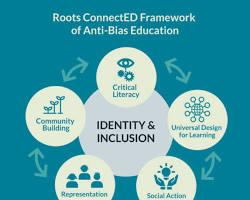
Anti-Bias Curriculum: Challenging Stereotypes in Real-Time
The anti-bias approach is proactive rather than reactive. It involves creating an environment where children feel empowered to recognize and resist prejudice.
Implementation: Educators must facilitate "teachable moments." For example, if a child suggests that "doctors are only men," educators should introduce resources, guest speakers, or stories that counteract this stereotype. According to Derman-Sparks (2020), this builds children's critical thinking and fosters a sense of social justice from an early age.
Goal: To help children develop a confident self-identity without feeling superior to others.
The picture shows four core goals of Anti-Bias Education as defined by Derman-Sparks (2020).
Aboriginal Pedagogies (The 8 Ways of Learning)
Integrating indigenous perspectives is a core requirement of EYLF V2.0. We adopt the 8 Ways of Learning framework, focusing on how Aboriginal people learn through culture.
• Implementation: This includes Story Sharing (using narrative to teach concepts), Land Links (connecting learning to local Country) and Non-verbal (learning through observation). By using these pedagogical methods, we honor the oldest living culture on Earth and provide a more comprehensive learning experience for all children (Yunkaporta, 2009).

The picture shows 8 Ways of Aboriginal Learning framework used to embed First Nations perspectives in our curriculum.

Supporting home languages through dual-language resources and inclusive literacy practices.
Linguistic Diversity Support and "Translanguaging"
In a multicultural center, a children's home language is their greatest cognitive asset. We move away from "English-only" policies policies toward a translanguaginv approach.
• Implementation: We encourage children to use their first language to process complex thoughts before expressing them in English. We provide bilingual books and use digital translation tools to ensure that EAL/D (English as an Additional Language or Dialect) children do not feel their home identity is a barrier to their education. This practice supports neural plasticity and maintains children's connection to their heritage (ACECQA, 2023).
Authentic Resource Selection: Moving Beyond the "Exotic"
Resources in the classroom must be "mirrors" of children's own lives and "windows" into the lives of others.
• Implementation: We perform regular Resource Audits to remove "staged" or stereotyped artifacts (e.g., plastic boomerangs or generic "ethnic" dolls). Instead, we work with families to bring in real-life items: authentic cooking utensils, traditional fabrics used in daily life, and family photos. This ensures that culture is presented as a living, breathing reality rather than a museum exhibition.

Integrating authentic artifacts and household items from diverse cultures into the learning environment.
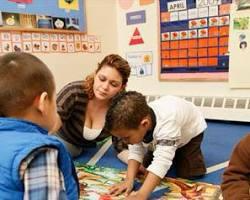
Critical Reflection on Whiteness and Western-Centric Norms
Culturally responsive practice requires educators to look inward. We must acknowledge that the Australian education system is built on Western norms that can unintentionally marginalize other ways of knowing.
• Implementation: Educators engage in Critical Reflection sessions to ask, "Whose knowledge is being valued in this lesson? Are we prioritizing individual achievement over collective well-being?" By de-centering “Whiteness,” we create space for diverse cultural epistemologies – such as collectivist family values – to be viewed as equally valid and powerful (Vandenbroeck, 2023).
PROFESSIONAL REFLECTION: MY PEDAGOGICAL IDENTITY
Reflecting on the multifaceted contexts of early childhood education in Australia - economic, social and cultural - I have come to understand that the role of an educator goes far beyond the classroom walls. We are not just teachers; We are advocates, cultural liaisons, and practitioners of social justice.
Moving forward, I am committed to practicing Critical Reflection as a daily habit. I will continue to challenge my own biases, de-center Western norms, and listen more deeply to the 'Funds of Knowledge' that each family carries. My goal is to create a learning environment where diversity is the foundation, equity is the practice, and every child feels a profound sense of Belonging, Being, and Becoming.
Create Your Own Website With Webador